Sakaja Responds to Flood Criticism: “I Have Not Failed Nairobi.”
As devastating floods continue to affect parts of the capital, Johnson Sakaja has broken his silence, pushing back against criticism over the city’s drainage crisis.
The Nairobi Governor insists he has not failed in his role, saying the real obstacle to solving the city’s flooding problems is insufficient funding, not a lack of ideas or plans.
“I have not failed to do my job as Nairobi Governor,” Sakaja said. “I have the ideas, and very good ones, too. The problem is I don’t have the money to implement these ideas that will solve Nairobi’s drainage problem.”
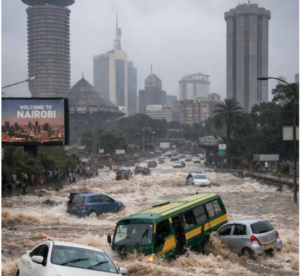
His remarks come as residents across several parts of the capital struggle with flooding after days of heavy rainfall that have submerged roads, homes, and businesses.
A City That Floods Too Easily
For many residents of Nairobi, flooding has become an all-too-familiar nightmare whenever heavy rains hit the city.
Streets quickly turn into rivers.
Cars stall in deep water.
Homes in low-lying areas become flooded within minutes.
Experts have long blamed the problem on a combination of:
- Outdated drainage infrastructure
- Rapid urban development
- Blocked drainage systems
- Construction on riparian land
According to Sakaja, fixing the problem requires large-scale infrastructure investment, something the county government cannot fully fund alone.

“We Have Solutions Ready”
Despite the criticism circulating on social media, Sakaja maintains that plans to fix Nairobi’s drainage system already exist.
The governor says the county has identified several projects that could significantly reduce flooding if properly funded.
These include:
- Expansion and redesign of major drainage channels
- Rehabilitation of aging storm-water systems
- Removal of illegal structures blocking waterways
- Large-scale unclogging and maintenance of drains
But according to the governor, these projects require billions of shillings to implement.
“We know what needs to be done,” Sakaja explained. “The challenge is the financial resources needed to implement these long-term solutions.”
Pressure Mounts After Deadly Floods
The statement comes amid growing public anger following deadly flooding incidents reported in the capital and other parts of the country.
Emergency responders, including the Kenya Red Cross, have been deployed to rescue residents trapped in flooded areas and assist displaced families.
The flooding has disrupted transport, damaged homes, and left many residents questioning whether enough is being done to protect the city from seasonal disasters.
A Political Debate Begins
Sakaja’s remarks are already sparking debate among Kenyans online.
Some residents say the governor is being honest about the financial limitations facing the county government.
Others argue that leadership should still find ways to prevent the recurring flooding crisis, regardless of budget constraints.
Urban planners and policy experts say solving the issue will require coordination between the county government and the national government, especially when it comes to major infrastructure funding.
The Bigger Question: Who Fixes Nairobi?
As the rains continue and the waters slowly recede, one question remains at the centre of the conversation:
Who is ultimately responsible for fixing Nairobi’s flooding problem?
For now, Sakaja insists the solutions exist, but without the funding to implement them, the city could continue facing the same crisis every rainy season.
And for millions of residents in Nairobi, that means the next heavy rain could once again turn parts of the capital into a disaster zone.