Iran Today: War, Uncertainty, and a Nation in Crisis
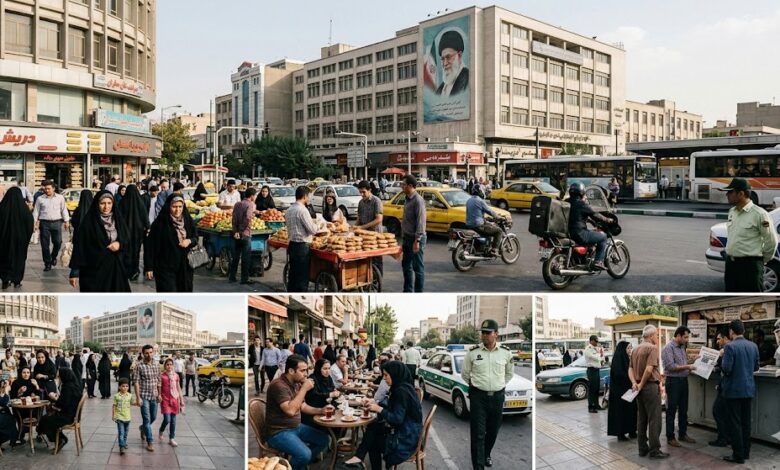
The world is watching one of the most dramatic and rapidly evolving crises of the 21st century unfold in Iran. What began as rising tensions between Tehran and Western powers has escalated into a full-scale military confrontation that is reshaping the country’s future and altering the balance of power across the Middle East.
A Nation Under Fire
In late February 2026, the United States and Israel launched a major joint military campaign against Iran, striking strategic military targets and key leadership compounds in Tehran. The operation reportedly targeted missile facilities, command centers, and senior officials.
Reports indicate that Supreme Leader Ayatollah Ali Khamenei was killed during the strikes, along with several high-ranking commanders. If confirmed, this would mark a historic turning point in Iran’s political history after decades of his leadership.
Airstrikes have continued across multiple regions, with coalition forces aiming to weaken Iran’s military capabilities and prevent further regional escalation.
Iran’s Response and Regional Escalation
Despite heavy losses, Iran has responded forcefully. The Islamic Revolutionary Guard Corps (IRGC) has launched missile and drone attacks targeting U.S. military bases and allied positions in the Gulf region. Regional security has deteriorated rapidly as neighboring countries increase defense readiness.
Iranian officials describe the confrontation as a defensive war imposed on the country, while Western governments argue the campaign is intended to limit Iran’s strategic and military reach.
Political Uncertainty and Leadership Transition
The reported death of Ayatollah Khamenei has triggered a leadership crisis at a moment of active warfare. Under Iran’s constitutional framework, the Assembly of Experts is responsible for selecting a new Supreme Leader. However, choosing a successor during wartime introduces uncertainty and factional tension within the political establishment.
An interim governing structure is believed to be overseeing state functions while deliberations on long-term leadership continue.
Civilian Impact and Humanitarian Concerns
The human cost of the conflict is rising. Civilian casualties are reported in the hundreds, with infrastructure damage affecting hospitals, residential areas, and public utilities.
Power outages, medical shortages, and displacement are compounding the humanitarian strain. Independent verification remains difficult due to restricted access and limited communication from within the country.
Internet Blackout and Information Restrictions
Iran is experiencing a near-total internet blackout. Whether caused by infrastructure damage, deliberate shutdowns, or both, the result is a significant information gap. Citizens face difficulty communicating internally and externally, while journalists and observers struggle to confirm events on the ground.
The blackout has disrupted banking systems, commerce, education, and daily life, further intensifying public anxiety.
Global Consequences
The conflict is sending shockwaves beyond Iran’s borders. Regional tensions have heightened, and strategic shipping routes, particularly near the Strait of Hormuz, face increased risk. Energy markets are reacting to uncertainty, and global powers are calling for restraint amid fears of a broader regional war.
Diplomatic efforts are ongoing, but no clear path toward de-escalation has yet emerged.
Conclusion
Iran stands at a historic crossroads. With its long-time supreme leader reportedly killed, military confrontation underway, and civilians bearing the brunt of the crisis, the nation faces profound uncertainty.
The coming days and weeks will likely determine not only Iran’s political future but also the stability of the wider Middle East. The situation remains fluid, and developments continue to unfold rapidly.