Analysis of the Samsung Galaxy S26+ Flagship Ecosystem
Technical Evolution, Agentic AI, and Market Dynamics
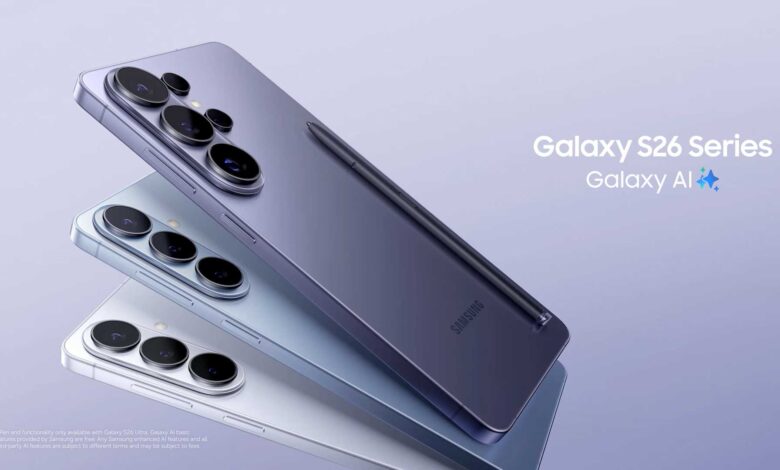
The announcement of the Samsung Galaxy S26 series on February 25, 2026, represents a pivotal moment in the trajectory of mobile computing, signaling a transition from reactive handsets to proactive agentic devices. Within this flagship triumvirate, the Galaxy S26+ occupies a critical strategic position, designed to balance the expansive screen real estate demanded by multimedia consumers with the ergonomic and economic requirements of the high-end market. Released officially on March 11, 2026, the device arrives during a period of significant architectural transition, particularly in the realms of semiconductor fabrication and localized artificial intelligence. The Galaxy S26+ is not merely an incremental update to the S25+; it is the manifestation of a “unified design identity” and a new computational philosophy centered on autonomous assistance.
Industrial Design and Physical Architecture
The physical form of the Galaxy S26+ reflects a refined aesthetic that Samsung describes as its most cohesive design language to date. While the premium Ultra model historically utilized sharper, more utilitarian angles, the 2026 generation sees a convergence of design traits. The S26+ adopts the sleek, rounded edges that are now standardized across the series, ensuring a consistent in-hand feel whether a user chooses the compact, plus, or ultra variant.
Dimensional Continuity and Structural Integrity
In terms of physical dimensions, the Galaxy S26+ maintains the precise footprint of its predecessor, a decision that suggests the 6.7-inch form factor has reached its ergonomic zenith for the “Plus” category. Measuring and weighing , the device remains remarkably thin for its screen size. This thinness is achieved through high-precision internal component stacking and the use of an advanced Armor Aluminum 2 frame, which offers superior rigidity and resistance to torsional stress. The exterior surfaces are protected by Corning Gorilla Glass Victus 2, providing a high degree of fracture resistance and scratch durability on both the front and rear panels.
The most notable visual change is the redesign of the rear camera array. Departing from the “floating lens” look of previous years, the Galaxy S26+ integrates its three lenses into a unified, pill-shaped island. This design element is intended to evoke a sense of premium precision and aligns the S26 series with the design motifs established by the Galaxy Z Fold 7. Furthermore, the device retains its IP68 certification, guaranteeing protection against dust ingress and water submersion up to for a duration of .
Table 1: Structural and Dimensional Specifications
| Feature | Specification | Detail / Source |
| Height | ||
| Width | ||
| Thickness | ||
| Weight | ||
| Build Materials | Armor Aluminum 2 / Victus 2 Glass | |
| Dust/Water Resistance | IP68 Rating | |
| Biometrics | Ultrasonic In-Screen Fingerprint |
Colorways and Market Options
Samsung has introduced a palette of colors for the 2026 cycle that includes four standard options: Cobalt Violet, Sky Blue, Black, and White. For consumers purchasing directly through the official Samsung website, two exclusive “boutique” colors—Silver Shadow and Pink Gold—are available, further differentiating the online storefront experience. These colors are applied using a multi-layered vapor deposition process that ensures depth and resistance to fading over the device’s projected seven-year lifespan.
Display Technology and Visual Processing
The display of the Galaxy S26+ is a 6.7-inch Dynamic AMOLED 2X panel, representing the pinnacle of Samsung’s current mass-production display technology. With a resolution of pixels (Quad HD+) and a pixel density of approximately , the panel provides extreme clarity for text and high-resolution media.
Adaptive Refresh and Luminance Performance
The panel utilizes Low-Temperature Polycrystalline Oxide (LTPO) technology, enabling a highly efficient adaptive refresh rate ranging from to . This capability is critical for optimizing battery life, as the display can drop to when viewing static text or using the Always-On Display functionality, and ramp up to for fluid scrolling and gaming. A major upgrade for 2026 is the peak brightness, which now reaches , a increase over the previous generation, ensuring the screen remains legible even under the harsh glare of direct equatorial sunlight.
While the S26+ shares much of its display DNA with the Ultra model, it notably lacks the “Privacy Display” hardware layer found on its larger sibling. The Privacy Display is a specialized pixel-dispersion technology that narrows viewing angles to protect sensitive data from side-glances in public spaces. For the S26+, Samsung instead relies on traditional software-based privacy alerts to notify users when apps attempt to access sensitive information.
ProScaler7 and AI Image Enhancement
To compensate for the lack of hardware-based privacy features, the Galaxy S26+ introduces “ProScaler7,” a proprietary AI-driven image enhancement engine. ProScaler7 works in conjunction with the system-on-a-chip (SoC) to improve image scaling, sharpening text and fine details while smoothing textures in video streams. This process makes content appear significantly closer to native resolution, reducing the visual artifacts often associated with digital upscaling.
Table 2: Display Architecture and Performance
| Component | Specification | Benefit / Source |
| Screen Size | 6.7-inch (Full Rectangle) |
Expansive yet ergonomic |
| Panel Type | Dynamic AMOLED 2X (LTPO) |
Color accuracy and efficiency |
| Resolution | (QHD+) |
Ultra-high pixel density |
| Refresh Rate | (Adaptive) |
Power saving and smoothness |
| Peak Brightness |
Superior sunlight legibility |
|
| Enhancement | ProScaler7 AI Scaling |
Sharper text and textures |
Computational Engine: The Silicon Bifurcation
The Galaxy S26+ is powered by a dual-chipset strategy that distinguishes between geographic markets, a practice that continues to evolve in 2026. For the United States, China, and Japan, the device utilizes the Qualcomm Snapdragon 8 Elite Gen 5 (for Galaxy). In Europe and other selected regions, the Samsung Exynos 2600 is deployed.
Snapdragon 8 Elite Gen 5: The Oryon Architecture
The Snapdragon 8 Elite Gen 5 is manufactured on TSMC’s (N3P) process node, which focuses on enhancing transistor density and power efficiency. This chipset represents a radical departure from ARM-standard designs, featuring Qualcomm’s custom-built 3rd Generation Oryon CPU. The octa-core configuration utilizes a architecture: two “Prime” cores reaching a world-leading and six “Performance” cores operating at .
The Exynos 2600, conversely, is manufactured on Samsung’s process node. While architectural differences exist between the two chips, Samsung has worked extensively to ensure performance parity in real-world scenarios, particularly regarding AI processing and thermal stability. Both platforms are paired with of high-speed LPDDR5X-9600 RAM, providing the bandwidth required for on-device multimodal AI models.
Benchmarks and Efficiency Metrics
In synthetic benchmarks, the Snapdragon 8 Elite Gen 5 demonstrates a improvement in single-core performance and a boost in multi-core workloads over the previous generation. Graphics performance is similarly enhanced, with the Adreno 840 GPU providing a increase in power while consuming less energy during gaming sessions. This efficiency is further bolstered by the introduction of Adreno High Performance Memory (HPM) and a “Tile Memory Heap” system that intelligently optimizes memory bandwidth for graphics-intensive tasks.
Table 3: Comparative Silicon Performance
| Metric | Snapdragon 8 Elite Gen 5 Improvement | Note / Source |
| CPU Speed | (up to ) |
3rd Gen Oryon Cores |
| GPU Power |
Adreno architecture with Ray Tracing |
|
| NPU Capacity |
Matrix Acceleration for AI |
|
| Power Efficiency | (CPU) |
3nm N3P Process Node |
| Gaming Longevity |
Overall SoC power savings |
The Neural Core and Agentic Intelligence
The most significant shift in the Galaxy S26+ is the transition from “Generative AI” to “Agentic AI”. This new paradigm, powered by a increase in NPU performance, focuses on proactive, autonomous assistance rather than simple prompt-response interactions.
The Personal Data Engine and Proactive Intelligence
The Galaxy S26 series utilizes a “Personal Data Engine” that analyzes on-device notifications, messages, and calendar data to build a secure, localized “Personal Knowledge Graph”. This graph allows the device to understand the user’s routine and preferences without sending sensitive data to the cloud. This intelligence is manifested through three primary interface features:
-
Now Brief: Accessed via the home screen widget or Edge panel, Now Brief provides context-driven summaries of the user’s day, highlighting critical appointments, travel alerts, and message summaries.
-
Now Bar: An adaptive element that provides recommendations based on the user’s current activity or location. For example, when arriving at a theater, the Now Bar may surface a digital ticket without manual input.
-
Now Nudge: An AI companion that provides real-time suggestions during tasks. If a contact asks “When are you free?” in a chat app, Now Nudge can analyze the user’s calendar and suggest a time slot directly above the keyboard.
Assistant Agnosticism: Bixby, Gemini, and Perplexity
Samsung has adopted a strategic stance of “Assistant Agnosticism” with the Galaxy S26+. While Bixby has been rebuilt to offer natural language support and real-time web search results (powered by a partnership with Perplexity), users are free to designate another assistant, such as Google Gemini, as their primary AI agent. This flexibility is intended to cater to power users who have already integrated their workflows into specific AI ecosystems.
One UI 8.5 and Android 16: The Operating Environment
The Galaxy S26+ ships with One UI 8.5, based on the Android 16 platform. This software suite is designed to maximize the capabilities of the silicon while introducing significant privacy and productivity enhancements.
System Personalization and Fluidity
One UI 8.5 introduces several aesthetic refinements intended to enhance readability and usability. App icons now carry a subtle 3D effect to make them appear more prominent, and the lock screen clock has been redesigned to move dynamically with the subject of the wallpaper, ensuring that figures or animals are not obscured by the time. The Quick Settings panel has been overhauled to allow for greater customization, including multi-action tiles that let users toggle features like Bluetooth or expand the tile to see a list of available devices directly from the panel.
Table 4: One UI 8.5 and Android 16 Key Features
| Feature | Functionality | Source |
| Progress Notifications | Real-time tracking of rideshare and deliveries | |
| Advanced Protection | Group-notifies and mutes promotional clutter | |
| Private Album | Hide media without a separate Secure Folder | |
| Bixby + Perplexity | Natural language and real-time web search | |
| Audio Eraser 2.0 | Works in 3rd party apps (YouTube, Netflix) | |
| 7-Year OS Support | Commitment to updates through 2033 |
Privacy Sandbox and Advanced Protection
Android 16 introduces an “Advanced Protection Mode” that significantly hardens the device against malicious actors. This mode includes theft detection locks, offline device locks, and enhanced scam detection that warns users in real-time if a caller matches known fraudulent patterns. Furthermore, the “Privacy Sandbox” has been expanded to allow for more secure ad-tracking that protects user identities while providing relevant content.
Optics, ISP Architecture, and the ProVisual Engine
The imaging system of the Galaxy S26+ is a sophisticated blend of proven hardware and cutting-edge computational photography. While the physical sensor array remains similar to the previous generation, the integration of the “ProVisual Engine” and a 20-bit Triple AI ISP transforms the final output.
Triple Rear Sensor Configuration
The rear camera system is anchored by a primary sensor (Samsung GN3) with an aperture and Optical Image Stabilization (OIS). This is supported by a ultra-wide lens ( FOV) and a telephoto lens with optical zoom. The front camera is a Wide AF unit that, for the first time on a “Plus” model, includes a dedicated AI ISP to produce natural skin tones and realistic bokeh in self-portraits.
Table 5: Optical Hardware and Capability
| Camera | Resolution | Focal Length / Aperture | Optical Zoom |
| Primary (Wide) | / |
Optical Quality |
|
| Ultra-Wide | / |
N/A |
|
| Telephoto | / |
Optical |
|
| Selfie (Front) | / |
N/A |
Professional Video and Nightography 3.0
The introduction of the Advanced Professional Video (APV) codec is perhaps the most significant upgrade for mobile creators. APV allows the S26+ to record high-bitrate video suitable for studio-grade post-production. This is complemented by “Nightography Video,” which utilizes AI to enhance low-light footage by improving color reproduction and reducing noise in dim environments like concerts or evening events.
The “Photo Assist” suite has also been upgraded to accept natural language prompts. Users can now describe desired changes, such as “change the sunset to a starry night” or “remove the person in the background,” and the generative AI will fulfill the request with realistic lighting and texture matching.
Energy Management and Thermal Dynamics
The Galaxy S26+ is powered by a battery, a capacity that has remained stable as Samsung prioritizes efficiency and charging speed over sheer volume. Despite the static capacity, the device offers up to of video playback, an hour more than the base S26, due to the efficiency gains of the chipset.
Fast Charging and Qi2 Standards
Wired charging remains at , allowing the device to reach a charge in approximately when used with a compatible charger (which is notably not included in the standard retail package). A major improvement is found in wireless charging, which has been bumped to . Both the S26 and S26+ are “Qi2 Ready,” incorporating magnetic alignment that ensures optimal coil placement for efficient power transfer and compatibility with a wide array of magnetic accessories.
Thermal Control and Sustainability
To mitigate the heat produced by the Prime cores, the Galaxy S26+ features an enlarged Vapor Chamber and a redesigned thermal interface material (TIM). This system is precisely tailored to spread heat evenly across the device’s aluminum frame, preventing “hot spots” that can lead to thermal throttling during sustained workloads like high-end gaming or video recording.
Communication Systems and Connectivity
Connectivity in 2026 is defined by the global rollout of Wi-Fi 7 and the expansion of Ultra-Wideband (UWB) applications. The Galaxy S26+ incorporates the Qualcomm FastConnect 7900 system, which offers power savings over the previous generation and integrates Bluetooth, Wi-Fi, and UWB into a single, AI-enhanced platform.
Networking and Short-Range Precision
-
Wi-Fi 7: Enables tri-band connectivity with significantly lower latency, essential for “Samsung DeX” and cloud-based gaming.
-
Bluetooth 6.0: The S26+ is one of the first devices to support Bluetooth 6.0, which introduces better handling of bond loss events and improved audio quality for LE Audio hearing aids.
-
UWB: Facilitates precise spatial awareness, enabling features like digital car keys and high-accuracy “Find My” functionality for the Galaxy ecosystem.
-
5G Advanced: The Snapdragon X85 5G Modem-RF system supports peak download speeds of and includes a 4th generation 5G AI processor to maintain reliable connections in high-density areas.
Table 6: Connectivity and Networking Standards
| Standard | Version | Benefit / Source |
| Wi-Fi | Wi-Fi 7 (Tri-band) |
lower gaming latency |
| Bluetooth | Bluetooth 6.0 |
Reliable LE Audio |
| Cellular | 5G Advanced (mmWave/Sub-6) |
Peak Download |
| USB | USB-C 3.2 |
DisplayPort 1.2 and OTG |
| UWB | Integrated |
Spatial precision and secure keys |
| Location | Multi-GNSS |
GPS, Glonass, Beidou, Galileo |
Market Economics, Pricing, and Regional Logistics
The Galaxy S26+ is positioned as a premium “balanced choice” for consumers who require high-end specs but find the Ultra model’s price or size prohibitive. However, the 2026 launch is marked by a price increase across the base models, a move attributed to the rising costs of semiconductor fabrication and the increased complexity of localized AI hardware.
Global Pricing and Availability
In the United States, the Galaxy S26+ starts at for the model, while the storage variant is priced at . In European markets, pricing is slightly higher due to regional taxes, with the model retailing for and the model for .
Table 7: Global and Regional Pricing (Estimated)
| Market | 12GB RAM / 256GB Storage | 12GB RAM / 512GB Storage | Source |
| USA | |||
| Europe | |||
| Kenya | |||
| Malaysia | RM 5,399 | RM 6,199 | |
| India | ₹ 1,19,999 | ₹ 1,29,999 (est.) |
Kenyan Market Analysis and Consumer Support
In Kenya, the Galaxy S26+ is a key driver for the premium segment. Retail prices at major outlets like Silkroom Electronics and Safaricom are expected to start at approximately for the base model. Samsung Kenya has established a robust support network, with M-Pesa refund processing times for online purchases ranging from 3-5 business days and a standard 12-month manufacturer warranty on all smartphones and tablets.
Pre-order incentives in the Kenyan and African markets often include “Samsung Care+,” providing one year of screen damage coverage, as well as “Double Storage” bundles where customers receive the model for the price of the variant. These offers are intended to mitigate the initial cost hike and encourage early adoption among the “S-Series” loyalists.
Conclusion: Strategic Outlook for the S26+
The Samsung Galaxy S26+ arrives as a refined, albeit expensive, expression of the modern flagship smartphone. By focusing on “Agentic AI” and proactive intelligence, Samsung is attempting to move beyond the specification wars and toward a user experience defined by seamless, automated assistance. The combination of a world-leading processor, a vibrant display, and a highly efficient architecture ensures that the S26+ remains competitive for the entirety of its seven-year software support window.
While the price increase and the exclusion of the “Privacy Display” feature may give some potential buyers pause, the S26+ remains the quintessential choice for the “pro-multitasker”—offering a large, high-resolution screen and elite performance in a design that is significantly more pocketable and affordable than the Ultra. As the first true “AI Agent” phone, the Galaxy S26+ sets a new baseline for what a smartphone must do to stay relevant in the second half of the decade.