Nairobi’s bustling Gikomba Market was thrown into turmoil after a section of the market was demolished on Monday night, leaving hundreds of traders counting heavy losses and scrambling to salvage what remains of their businesses.
By early Tuesday morning, the usually vibrant trading hub had turned into a scene of shock and frustration. Piles of broken timber, twisted metal sheets, and scattered merchandise lay where stalls once stood. Traders gathered around the rubble, many visibly distressed as they tried to recover goods buried under the debris.
Gikomba, widely known as the heart of Nairobi’s second-hand clothing trade and one of the city’s busiest informal markets, supports thousands of small businesses and families. For many traders, the stalls that were demolished were not just structures, they were their only source of livelihood.
Some traders said they were caught completely off guard by the overnight demolition. Many claim they were not given adequate notice, leaving them no time to move their goods or prepare for the loss.
“I came in the morning and found everything gone,” one trader said while sifting through broken wood and clothing items. “This is where I feed my family from.”
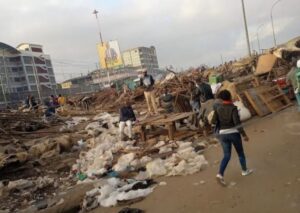
The incident has sparked fresh conversations about the ongoing struggles faced by informal traders in Nairobi, especially around market planning, communication from authorities, and the protection of small-scale businesses.
While demolitions are sometimes linked to land disputes, redevelopment plans, or enforcement operations, the immediate impact is often felt most deeply by everyday traders trying to earn a living.
As the dust settles, many traders are now left wondering what comes next: where they will trade from, how they will recover their losses, and whether any support will come their way.
For now, the remains of the demolished section stand as a painful reminder of how quickly livelihoods can be disrupted in Nairobi’s informal economy.